Automated Test Solutions

Automated Systems
AUTOMATED TEST SYSTEMS

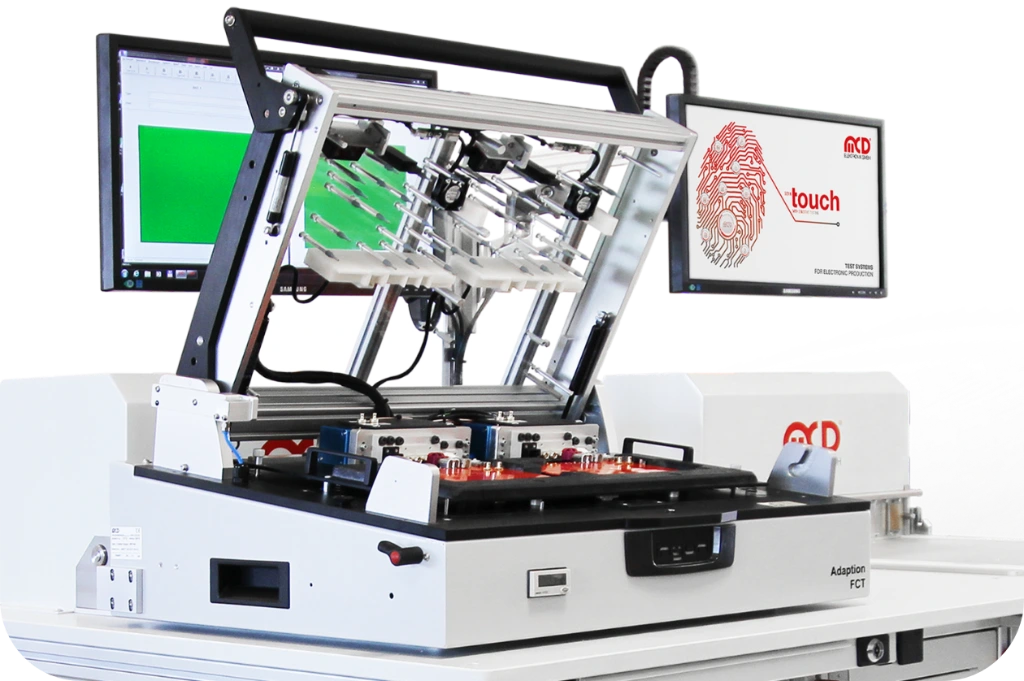
Automated test systems from MCD Elektronik handle test sequences, handling, contacting, measurement, evaluation, and documentation—either fully or partially automated. From semi-automated test stations to rotary indexing tables and robot-assisted test cells, MCD develops custom solutions for reproducible quality, stable processes, and efficient mass production testing.
AUTOMATED TESTING

Automated test systems execute test sequences according to defined specifications, thereby reducing manual influences in the testing process. Depending on the application, individual process steps or the entire test sequence can be automated.
solutions_automatisierung-detail-1-1024x708

Automated Systems

Automated Test Solutions

Automated testing solutions for repeatable processes

The device under test is loaded, positioned, connected, stimulated, measured and evaluated. Depending on the system, automation also handles clamping, handling, measurement data acquisition, result evaluation and documentation.

MCD Elektronik develops automated test systems tailored to the device under test, the process, the degree of automation and quality requirements—from test concept to on-site commissioning.

Automation level
Individual steps to a fully automated test sequence
Process quality
High repeatability and consistent cycle times
Documentation
Traceable test results and comprehensive data traceability
TYPICAL TESTING METHODS AND CONCEPTS

Automated test systems combine testing and process steps into defined workflows. Depending on the application, functional tests, electrical measurements, communication tests, RF tests, optical inspections, as well as programming and documentation processes can be integrated.
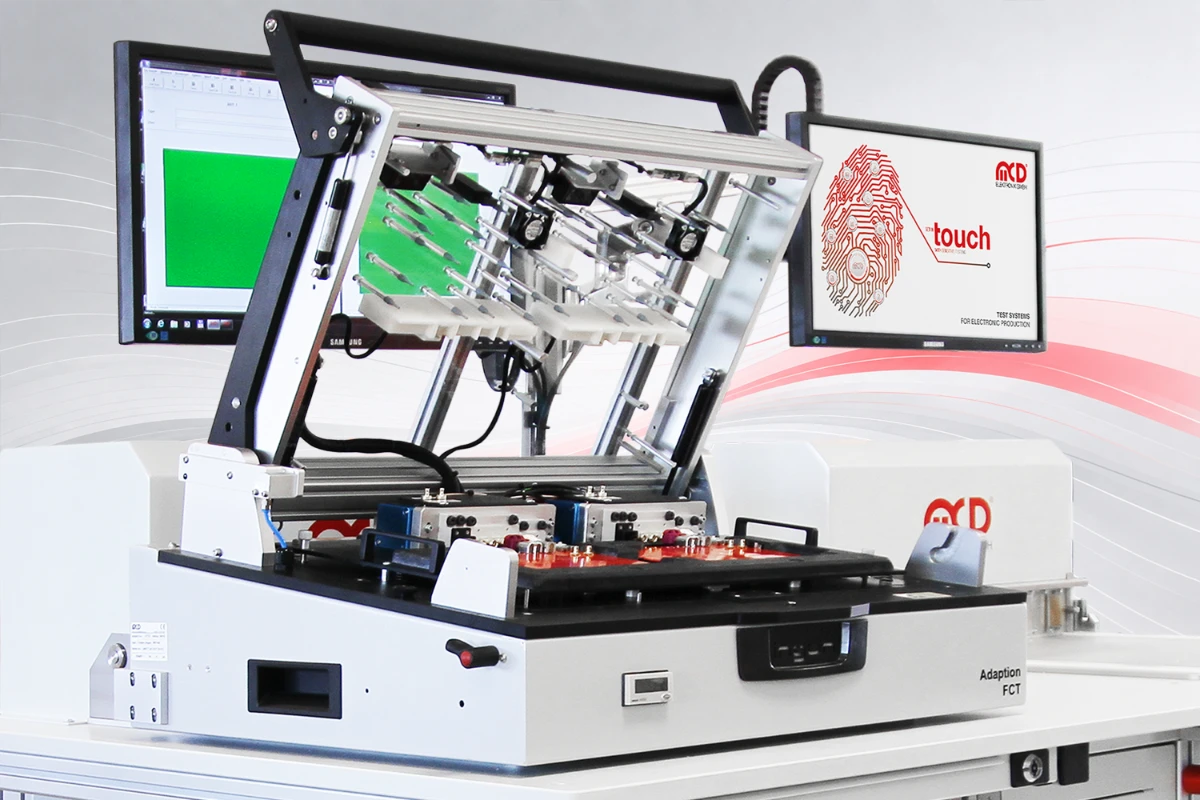
Test station with result evaluation
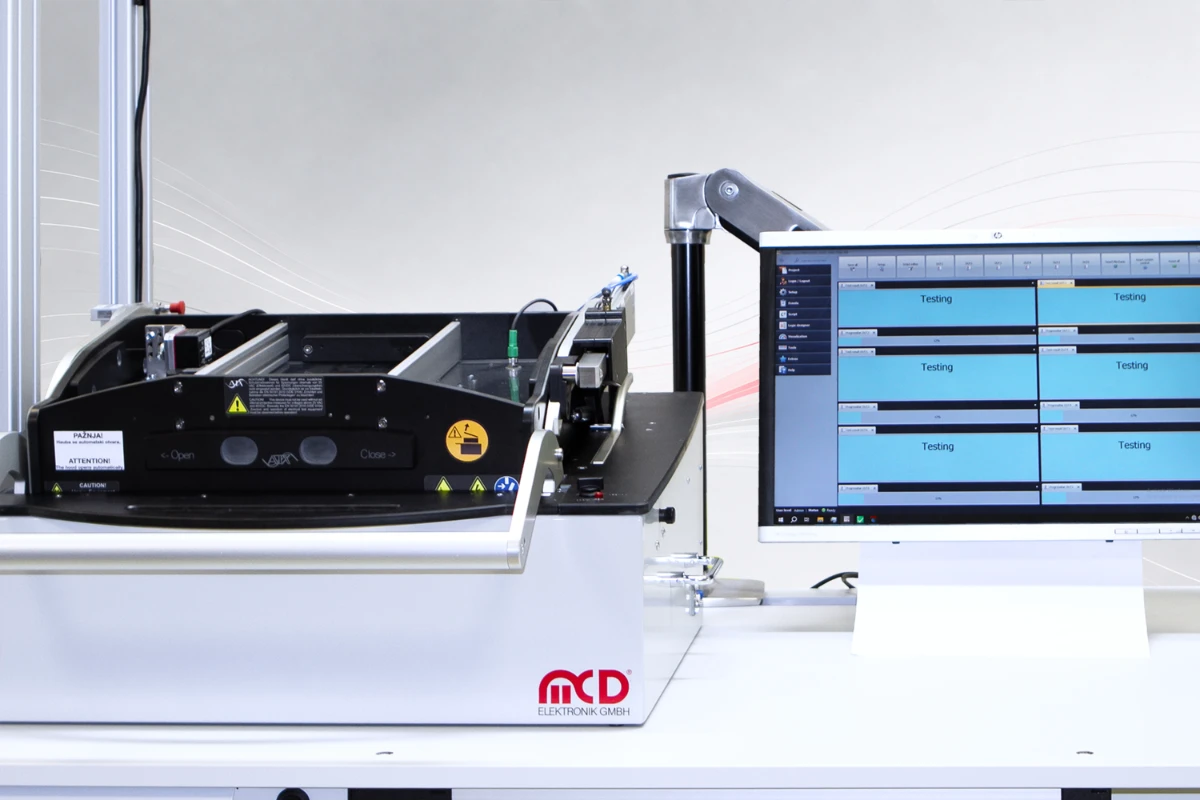
Front view of test station
Display showing test overview
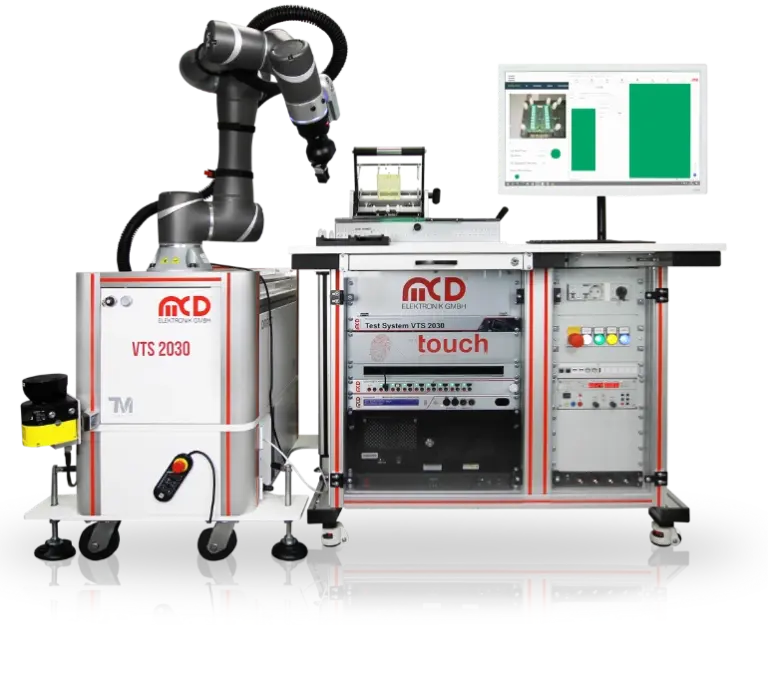
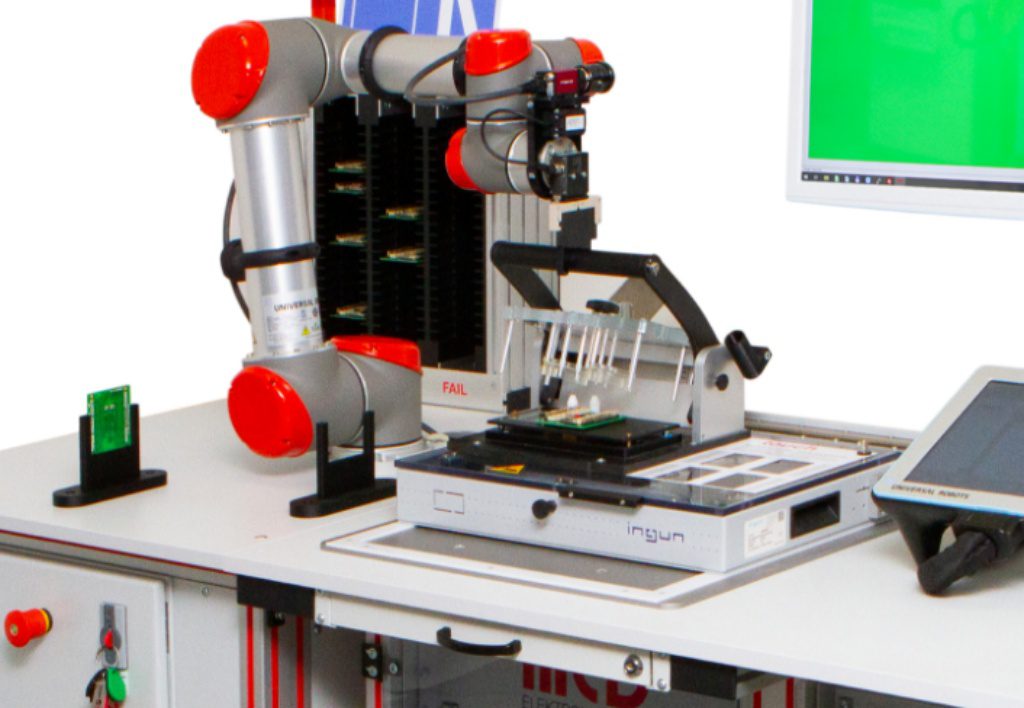
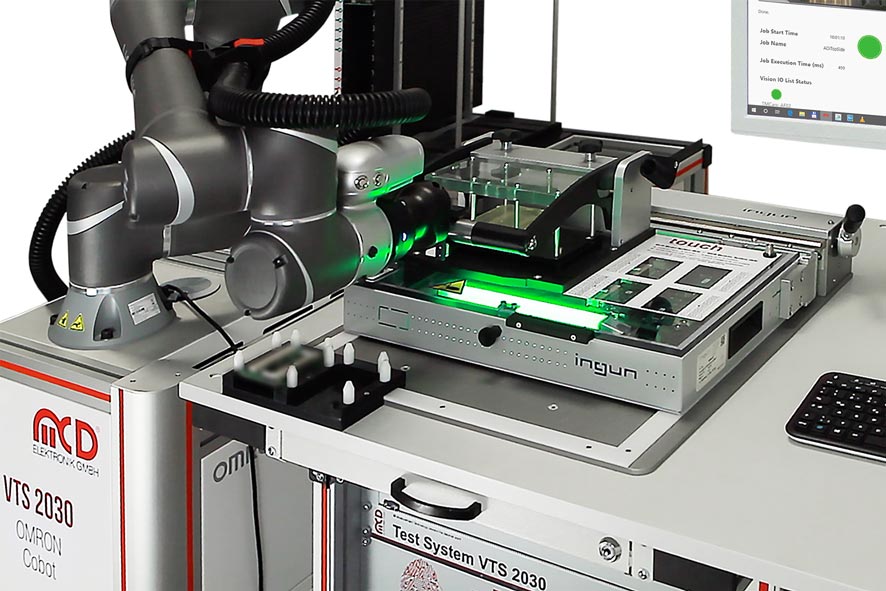
Robot-assisted VTS 2030 test station
Overall view of the test setup
Robot, test adapter and sensors
Operator area of a test system
View of the operator area
USER and ADMIN labeling

The test process can range from individual automated work steps to a fully automated sequence.

  • Loading and positioning the device under test
  • Contacting and locking
  • Stimulation and measurement data acquisition
  • Automatic result evaluation

Electronic assemblies are tested under defined conditions, and relevant electrical and functional parameters are evaluated automatically.

  • Functional and end-of-line tests
  • Current and voltage measurements
  • Signal and communication testing
  • Pin checks

Depending on the application, additional test methods and production-related process steps can be integrated into the automated test system.

  • RF testing
  • Optical inspections
  • Leak and load testing
  • Flash programming and configuration
  • Label printing

In addition to testing, automated workflows can also handle part handling, sorting and digital test result documentation.

  • Automated handling
  • Pass/fail sorting
  • Digital test result documentation
  • Data integration and traceability
mcd_plus_white
Flexible system concepts for different processes

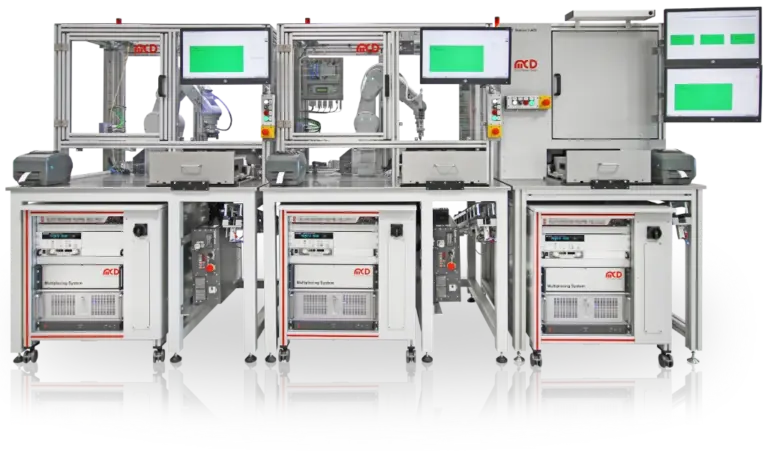
Automated test systems can be configured in many ways: as a semi-automated test station, automated adapter station, rotary indexing table system, robot cell, validation station or combined assembly and test system.

Test methods and concepts used

The focus of automated test systems is on automating the test process itself. Mechanics, adaptation, measurement technology, software, safety, the operating concept and data integration are combined into a stable, scalable and maintainable overall system.

Functional and electrical testing
Functional and end-of-line testing of electronic assemblies
Current and voltage measurements
Signal and communication testing
Pin checks
Advanced test methods
RF testing
Optical inspection
Leak testing
Load testing
Automated process integration
Flash and programming processes
Label printing
Pass/fail sorting
Digital test result documentation
Flexible automation concepts
Semi-automated test stations
Automated adapter stations
Rotary indexing table systems
Robot cells
Validation stations
Flexible automation concepts
Combined assembly and test systems

FREQUENTLY ASKED QUESTIONS

FAQS

An automated test system is a testing solution in which one or more steps of the testing process are performed automatically. These include, for example, contacting, stimulation, measurement, evaluation, documentation of results, handling, or sorting. This varies between semi-automated and fully automated systems. With semi-automatic test systems, the operator usually still performs individual process steps, such as loading or unloading the test specimen, while the actual test sequence is controlled and evaluated automatically. Fully automatic test systems, on the other hand, also perform handling, positioning, contacting, testing, and post-processing without manual intervention—for example, using robots, rotary indexing tables, or integrated automation modules.
Automated testing refers to the automation of the testing process itself. The system can be configured as a single test station, a robotic cell, a rotary indexing table, or a test station. Inline testing is a specific form of this: The test system is directly integrated into a running production line and linked to the material flow, cycle time, and line control. In both cases, however, the testing process is automated.
Typical tasks include functional tests, end-of-line inspections, current and voltage measurements, signal and communication tests, optical inspections, leak tests, programming processes, label printing, pass/fail sorting, and database integration.
An automated test system is useful when recurring test procedures, high production volumes, complex measurement sequences, tight cycle time requirements, or high standards for repeatability and documentation are necessary. In addition, an automation solution reduces manual interference and ensures consistent test conditions.
Yes. Depending on their configuration, existing test stations can be expanded with automatic locking mechanisms, contact systems, handling systems, robots, gantries, software functions, or data interfaces. This allows the level of automation to be increased incrementally without necessarily having to build a completely new, automated test station.

Downloads

Detailed Information

Technical Article

REFERENCE PROJECTS

VTS 2030 with Robotics
for Automated Test Systems

Multiple Haptic Component Testing