EOLT Systems

Multiple Haptic Component Testing

This end-of-line test line, with five stations and two robotic cells, tests the haptic, visual, and functional characteristics of automotive control panel bezels and switches

An intelligent, centralized network of the test cells flexibly controls and monitors all test processes and adapts them to different test specimens. The line combines robot-assisted haptic tests, dynamic force-displacement and torque measurements, and optical inspections (AOI) in one integrated test system. This ensures precise, repeatable, and efficient quality assurance in the end-of-line process.
Challenges and Concept

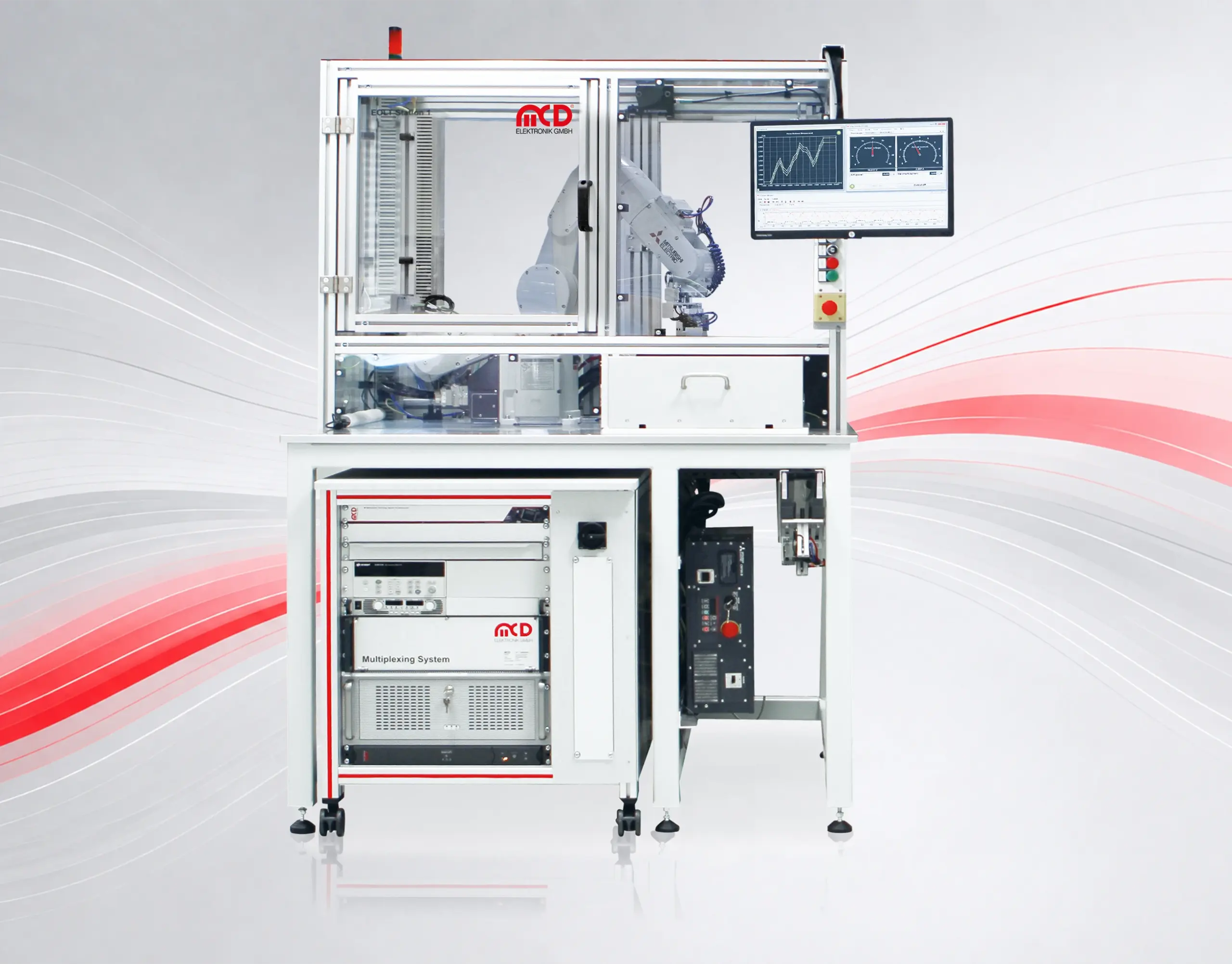
The end-of-line test line consists of three coordinated stations for comprehensive quality testing of automotive control panel bezels and switches. Two integrated robotic cells perform the haptic testing processes and ensure highly repeatable measurement results.

EOLT robot cell_mcd-02 (5)-2616x2048

Blinker, Kamera, Heizung und Assistenzsysteme.

EOLT Systems

Außenspiegel

Multiple Haptic Component Testing

Automated EOL Test Line for Haptic Components

Six-axis industrial robots precisely capture and evaluate dynamic rotary actuation, friction forces, and force-displacement profiles. The setup is complemented by mechanical test methods such as wobble circle testing and electrical contacting to check component functionality.

The entire line is controlled centrally by an MCD-integrated line control system. Reject (NIO) parts are discharged via pneumatic chutes and monitored by a through-feed sensor. The graphical user interface, as well as visualization and evaluation of the test process, are provided via MCD tool monitors.

Test Line
3 stations
Robotic Cells
2
Robotics
6-axis industrial robots
Testing and Functional Scope

The end-of-line test line performs repeatable testing of haptic components in automotive control panel bezels and switches as part of an automated production process:

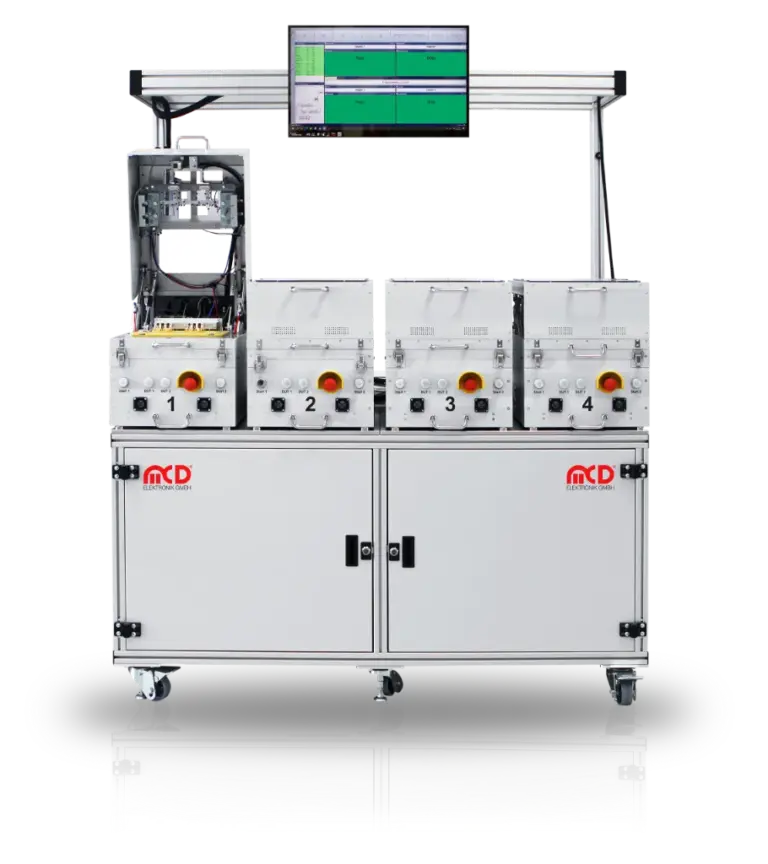
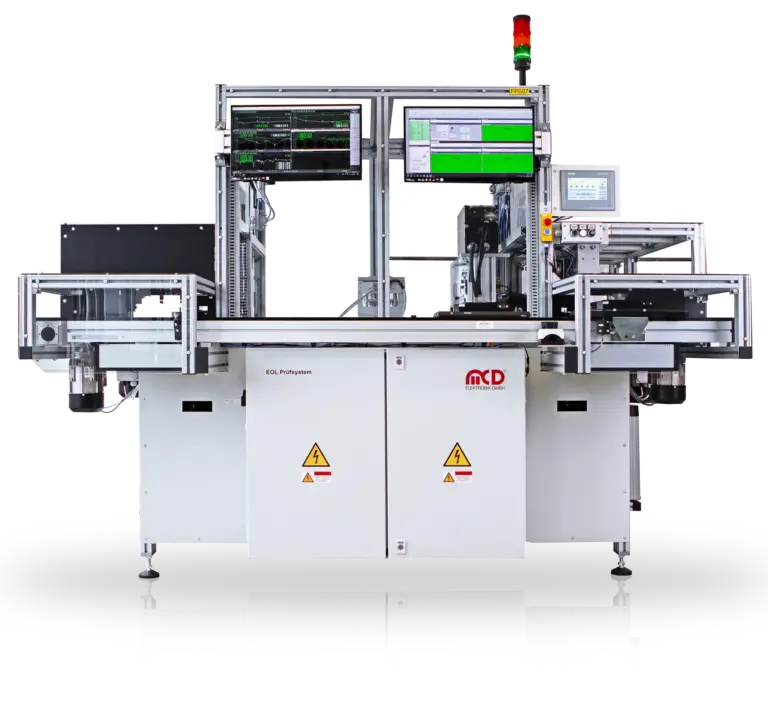
EOL test station for haptic components
Overall view of the test station
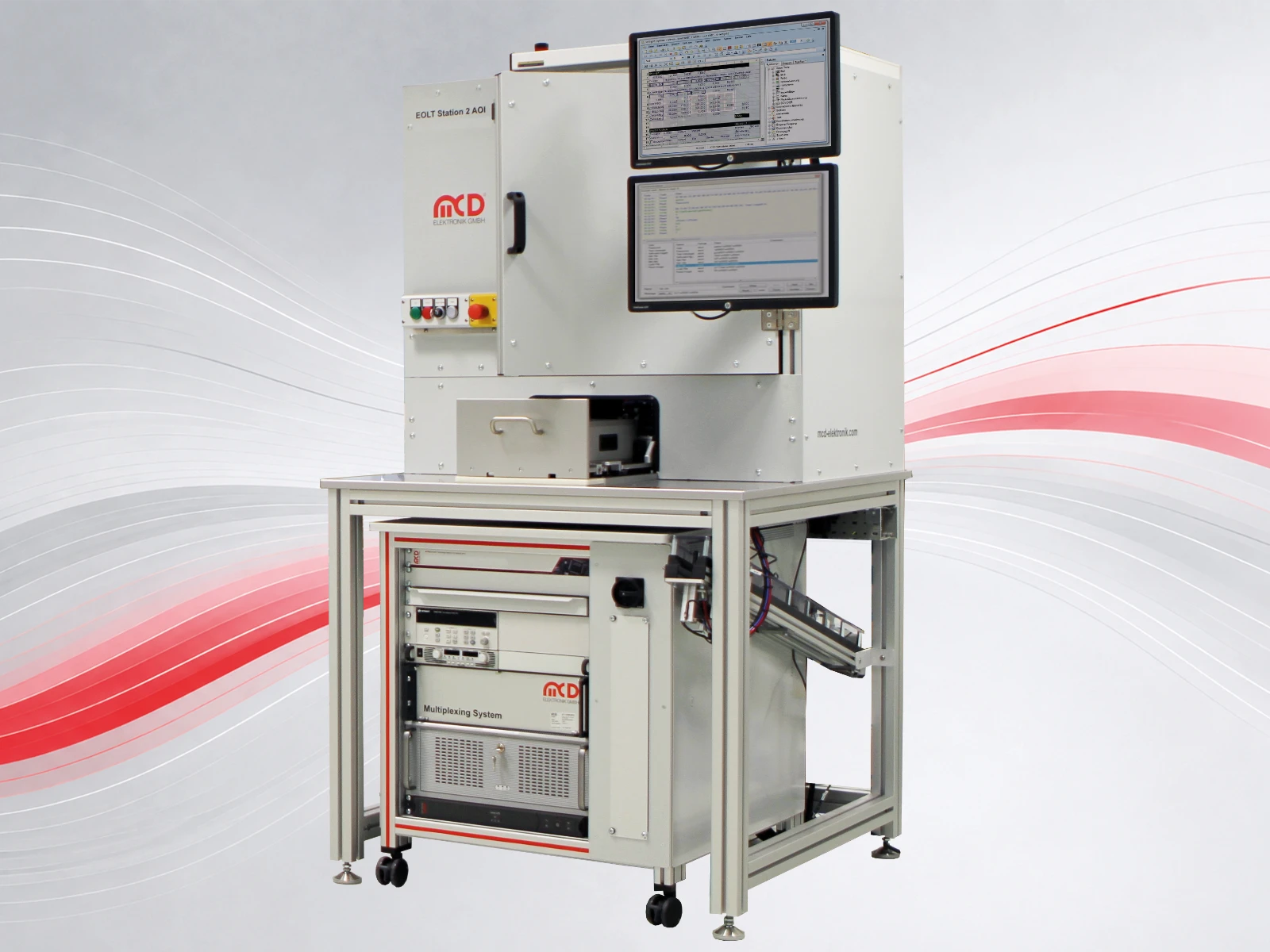
Test cell with operator monitors
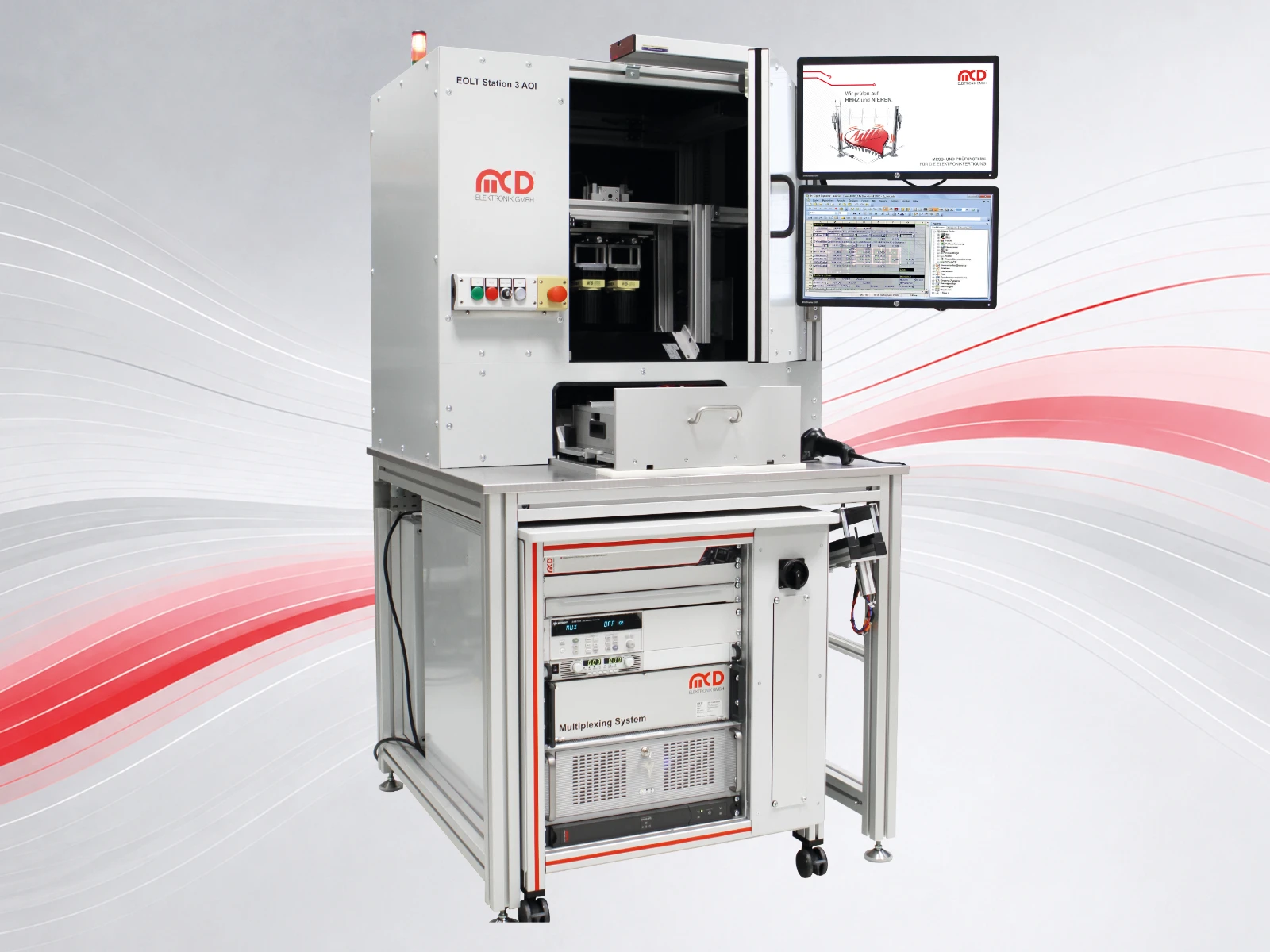
Open test station for haptic components
Front view of the test system
Test area and measurement technology

Six-axis industrial robots simulate real operating processes and capture the haptic characteristics of the control elements.

  • Simulation of real operating processes
  • Capture of dynamic rotary movements
  • Measurement of friction and actuation forces
  • Assessment of resistance, smooth operation, and return behavior

Force-displacement profiles and torque curves are captured and evaluated in real time.

  • Force-displacement measurements on push buttons and switches
  • Torque measurements on rotary switches
  • Real-time evaluation of measured values
  • Verification of switching points

Mechanical test methods and automatic contacting complement the haptic assessment of the components.

  • Wobble circle testing to detect bent or misaligned pins
  • Automatic contacting for functional testing
  • Electrical signal feedback to verify switching points
  • Results provided for quality assessment

Interchangeable adapters and centralized line control support different product variants and repeatable series production.

  • Drawer system with interchangeable adapters
  • Testing of different product variants and types
  • Central collection and visualization of test results
  • Repeatable and efficient testing in series production
mcd_plus_white
Integrated Line Control and NIO Ejection

The MCD-integrated line control system coordinates the test process across all three stations. Reject (NIO) parts are discharged pneumatically, and a through-feed sensor monitors the ejection process.

Test Methods and Results

Combining haptic, electrical, and visual testing enables precise and repeatable quality control of the control elements within the automated end-of-line test line.

Haptic Testing
Capture of torque profiles on rotary switches
Force-displacement curves for push buttons and switches
Assessment of haptic characteristics
Verification of switching points via electrical signal feedback
Visual Inspection
AOI testing of LED color and brightness
Assessment of LED position
Inspection of symbol quality and legibility
Automated testing of search, day, night, and functional lighting
Image Analysis and Test Technology
High-resolution cameras for visual inspection
Detailed image analysis with the MCD Vision ToolMonitor
Different gripping and actuation tools in the robotic cells
Central visualization and evaluation via MCD tool monitors
Process and Quality Assessment
Precise capture of haptic characteristics
Repeatable measurement results
Combined haptic, electrical, and visual quality control
Test results provided for quality assessment

FREQUENTLY ASKED QUESTIONS

FAQS

This EOL (end-of-line) test line is an automated testing system at the end of a production line. Within the robotic cells, visual, haptic, and functional tests are performed using gripping, probing, and contacting elements. This ensures consistent functionality and quality without the influence of human error.
This line combines multiple test methods: haptic tests such as torque, friction resistance, and force-displacement measurements; mechanical wobble circle tests; electrical current, voltage, or load measurements; and visual inspections of LEDs, symbols, and lighting.
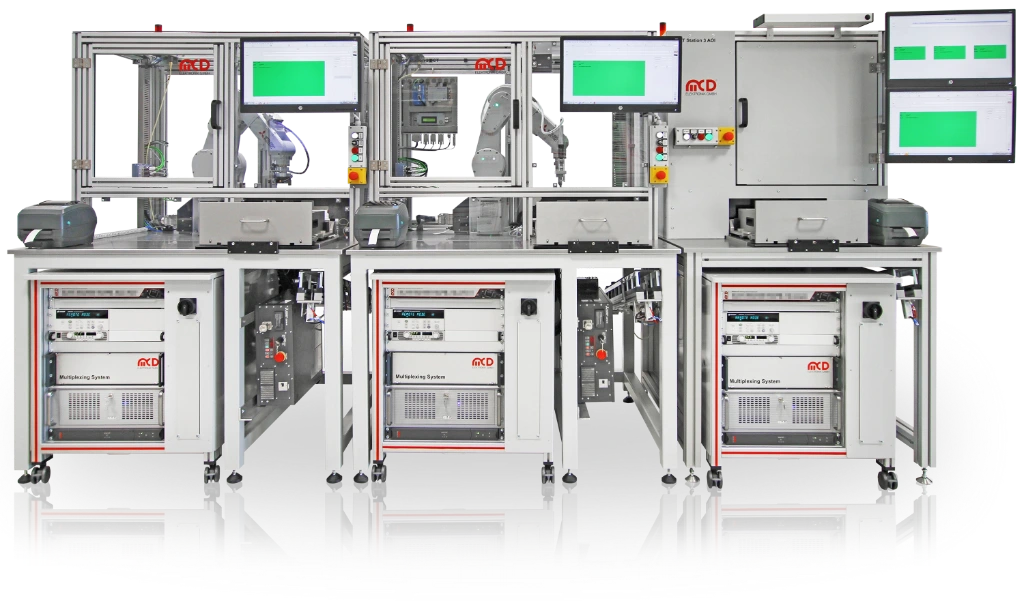
The robots in the test cells perform precise and repeatable haptic testing. Six-axis articulated robots simulate real human operating movements while measuring component forces, torques, and mechanical resistance. Defective parts (NIO) are discharged and separated via monitored reject chutes.
Visual inspection is performed using an AOI (Automated Optical Inspection) system with specialist cameras. The test specimens are specifically illuminated in a darkened cell. LED color, brightness, symbol quality, and different lighting conditions are automatically captured and assessed against defined target parameters.
All captured measurement and test data is consolidated and visualized centrally via the MCD line control system. The system also coordinates the associated test sequences and centrally provides relevant process information. Linking the data to the test specimen’s unique UID enables complete traceability and documentation. Connected label printers can also provide relevant product and test data directly for shipment preparation.

KEY FACTS

Key facts at a glance

Test System
Automated test system
Handling
Fully automated
Concept
Test cell with one component per cycle – 1 DUT per test sequence
Test Methods & Scope
Electrical: voltage, current
Visual: completeness check
Haptic / mechanical: load, torque testing, force-displacement measurement
Components
MCD TestManager, MCD tool monitors, MCD Controller MIO1616, multiplexer, robots, MCD gripping and actuation tools for robots, cameras

REFERENCE PROJECTS

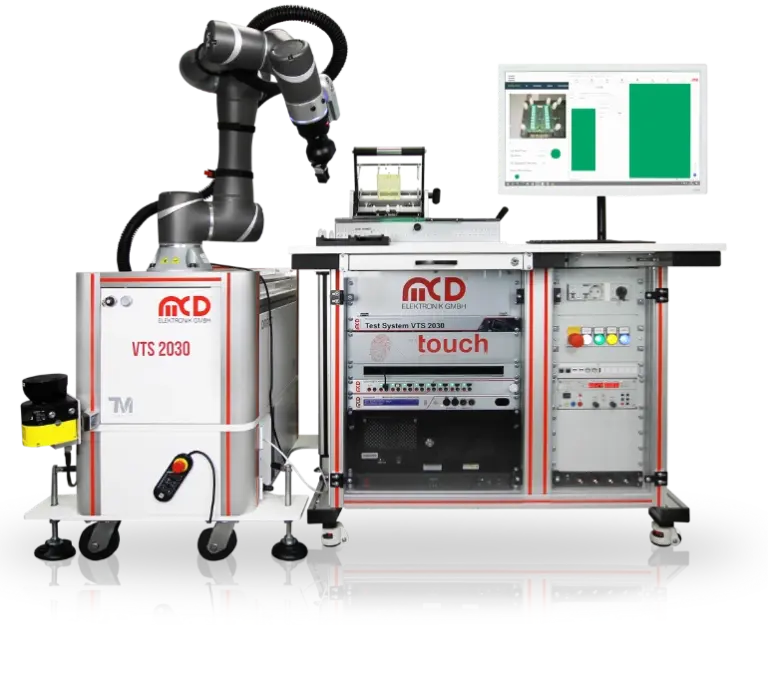
VTS 2030 with Robotics
for Automated Test Systems

Inline system for testing multiple printed circuit boards

Inline test system for mechatronic components