End-of-Line Test Systems

EOLT Systems

End-of-Line Test Systems

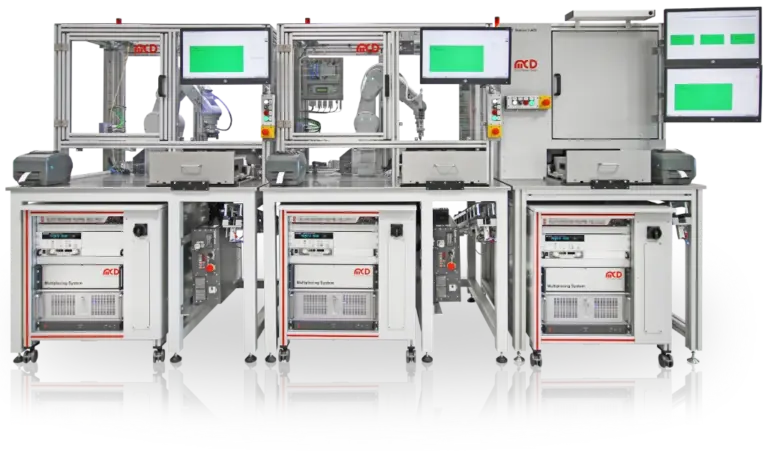
At the end of the manufacturing process, it is determined whether a product meets all functional, electrical, and quality requirements. To this end, MCD Elektronik develops customized end-of-line systems that reliably test finished products for functionality, quality, and compliance with specifications. This ranges from manual test stations to fully automated test cells with robotics and line integration—from planning to on-site commissioning, all from a single source.
End-of-Line Tests

End-of-line tests are the final quality check of a product at the end of production. All relevant functions, interfaces and quality characteristics must be reliably tested against defined specifications.

solutions_eolt-detail-3 (1)-1537x1024

EOLT Systems

End-of-Line Test Systems

Tailored EOL test systems for series production

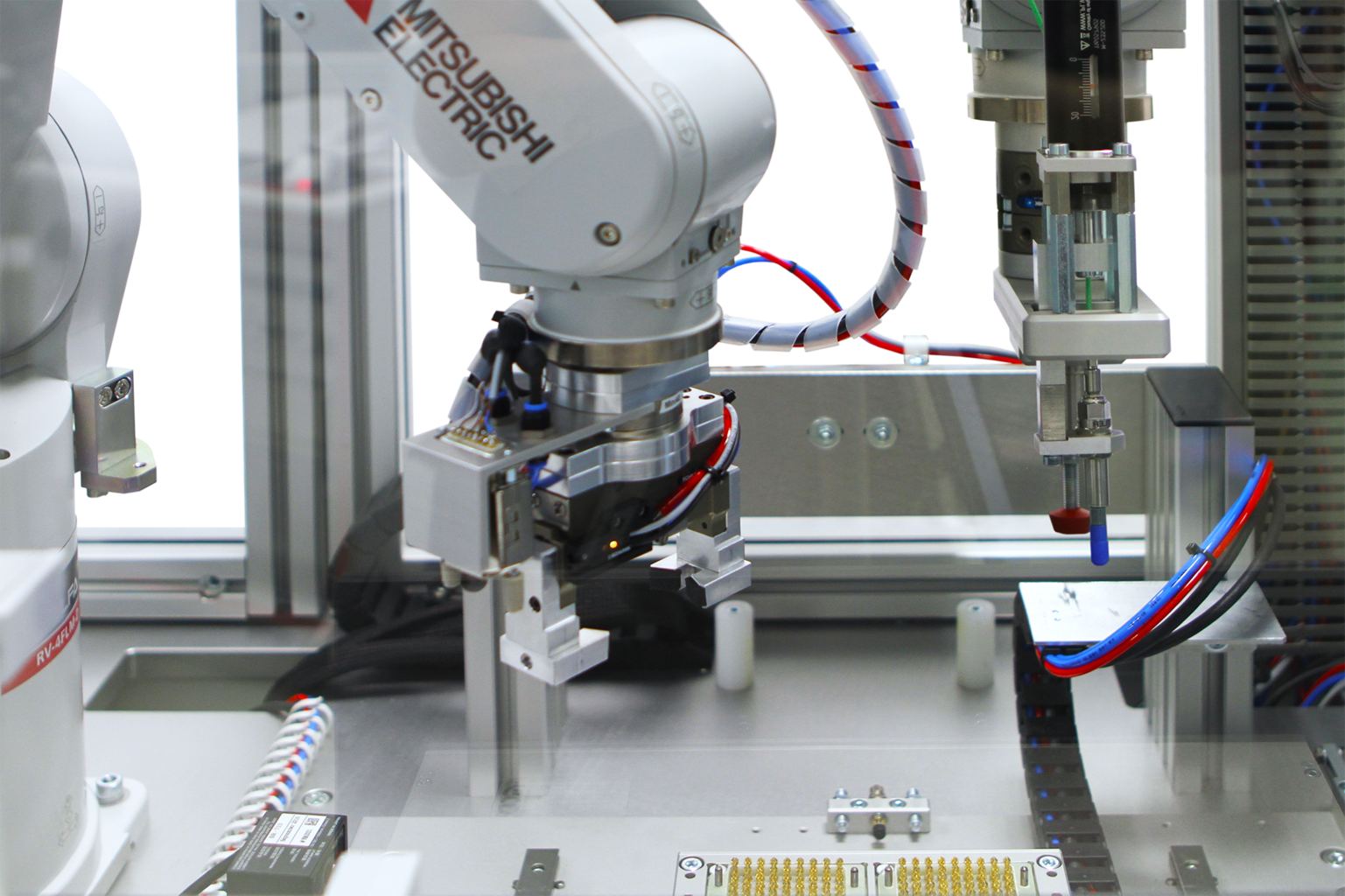
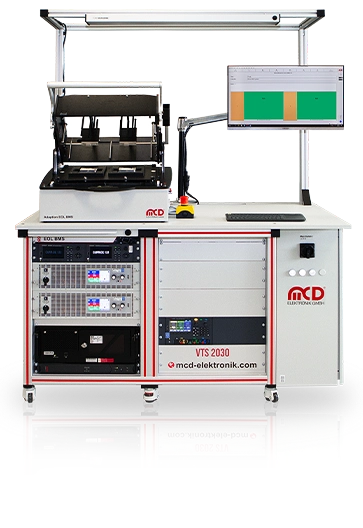
EOL test stands are used directly at the end of an assembly or production line. Depending on the product, cycle time, test requirements and level of automation, they can be designed as manual test stations, semi-automatic stations, rotary indexing tables, robot-assisted test cells or fully integrated line solutions.

EOL tests help to identify defective products before delivery, reduce returns and ensure consistently high product quality. At the same time, they provide documented measurement results for traceability, series release and process optimization.

Test timing
at the end of production
System design
semi-automatic, fully automatic or integrated
Quality assurance
documented measurement results and traceability
Typical Test Methods and Concepts

EOL test systems cover different test tasks depending on the application. Electronics, communication, radio frequency, mechanics, haptics, optics, as well as programming and parameterization can be combined within a tailored test concept.

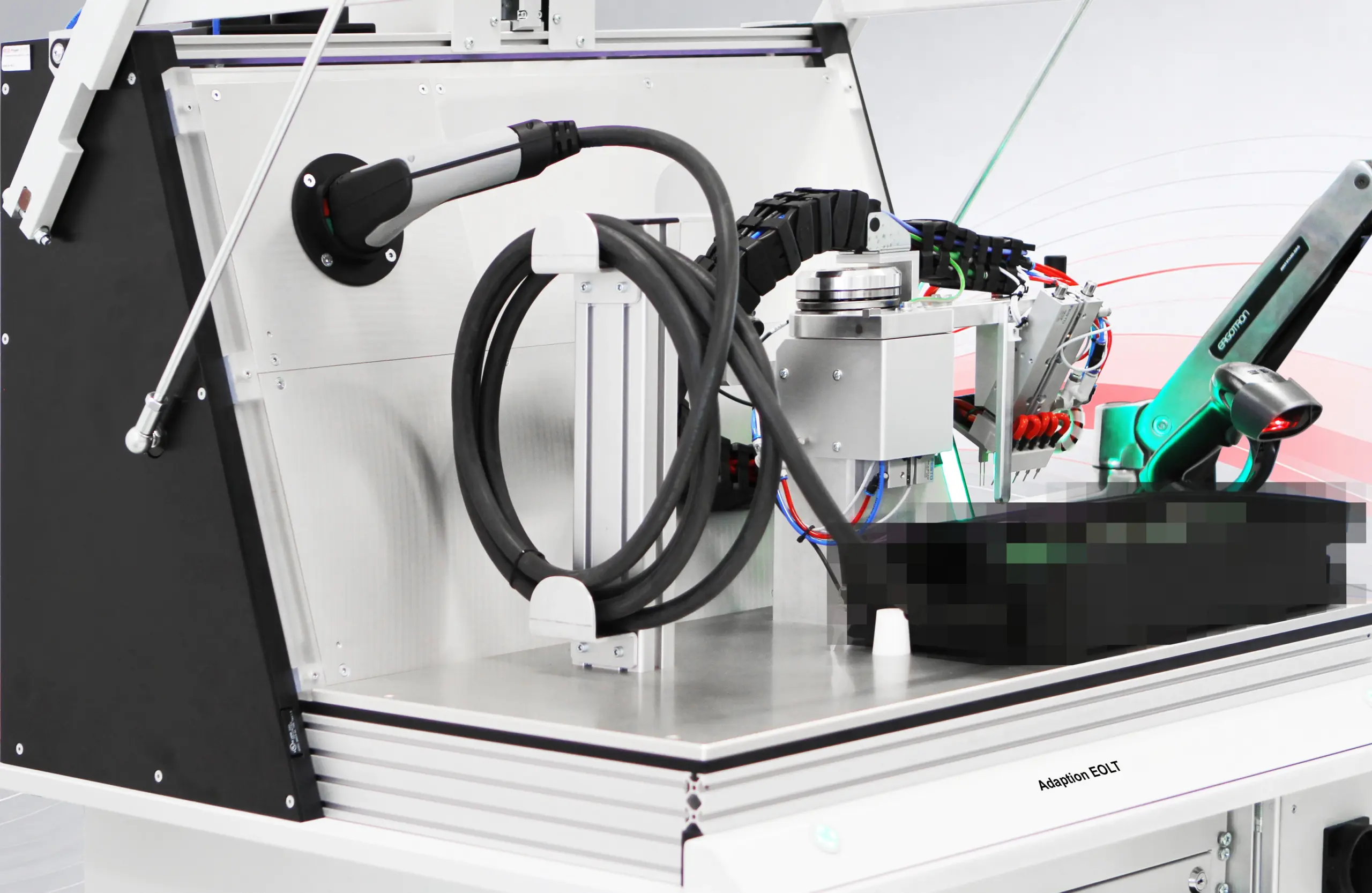
Detailed view of the wall charging station
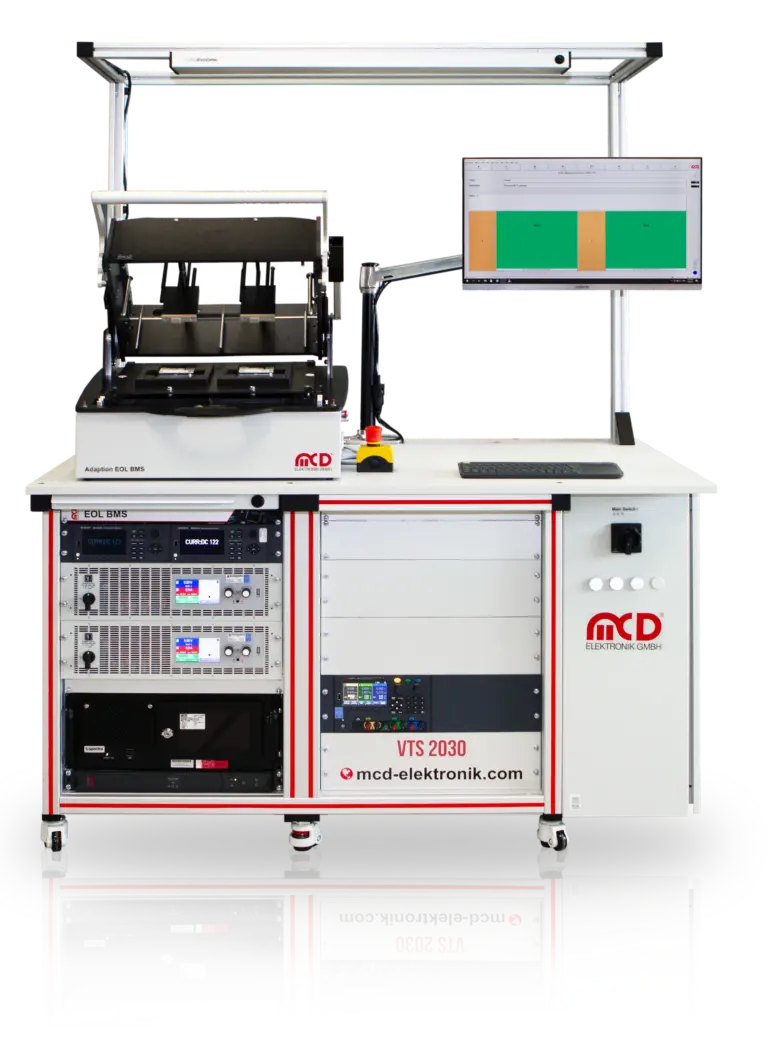
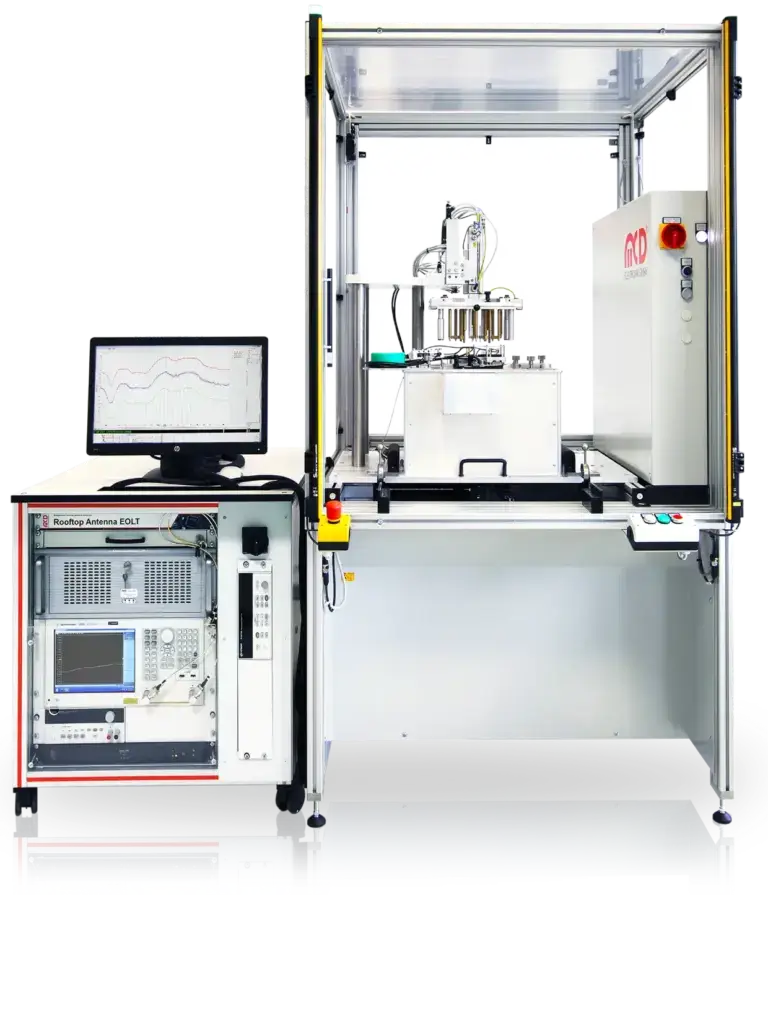
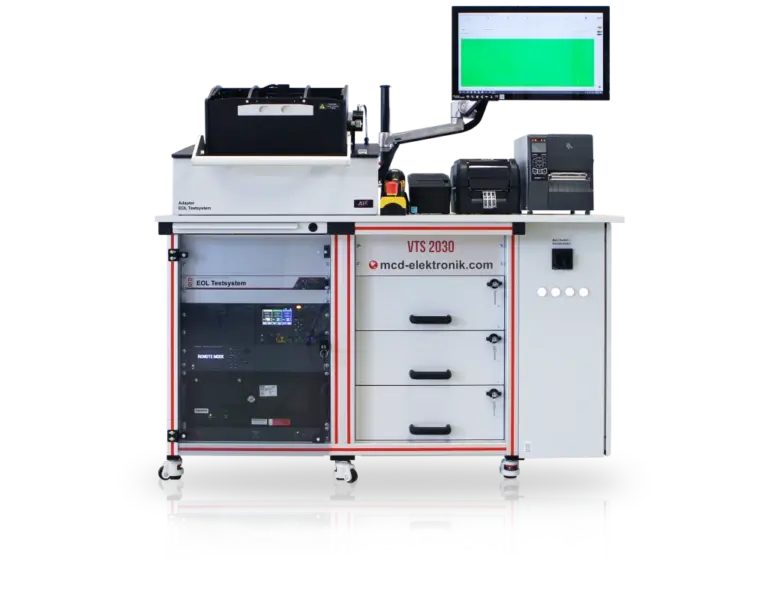
EOL test system
Electric wall charging station
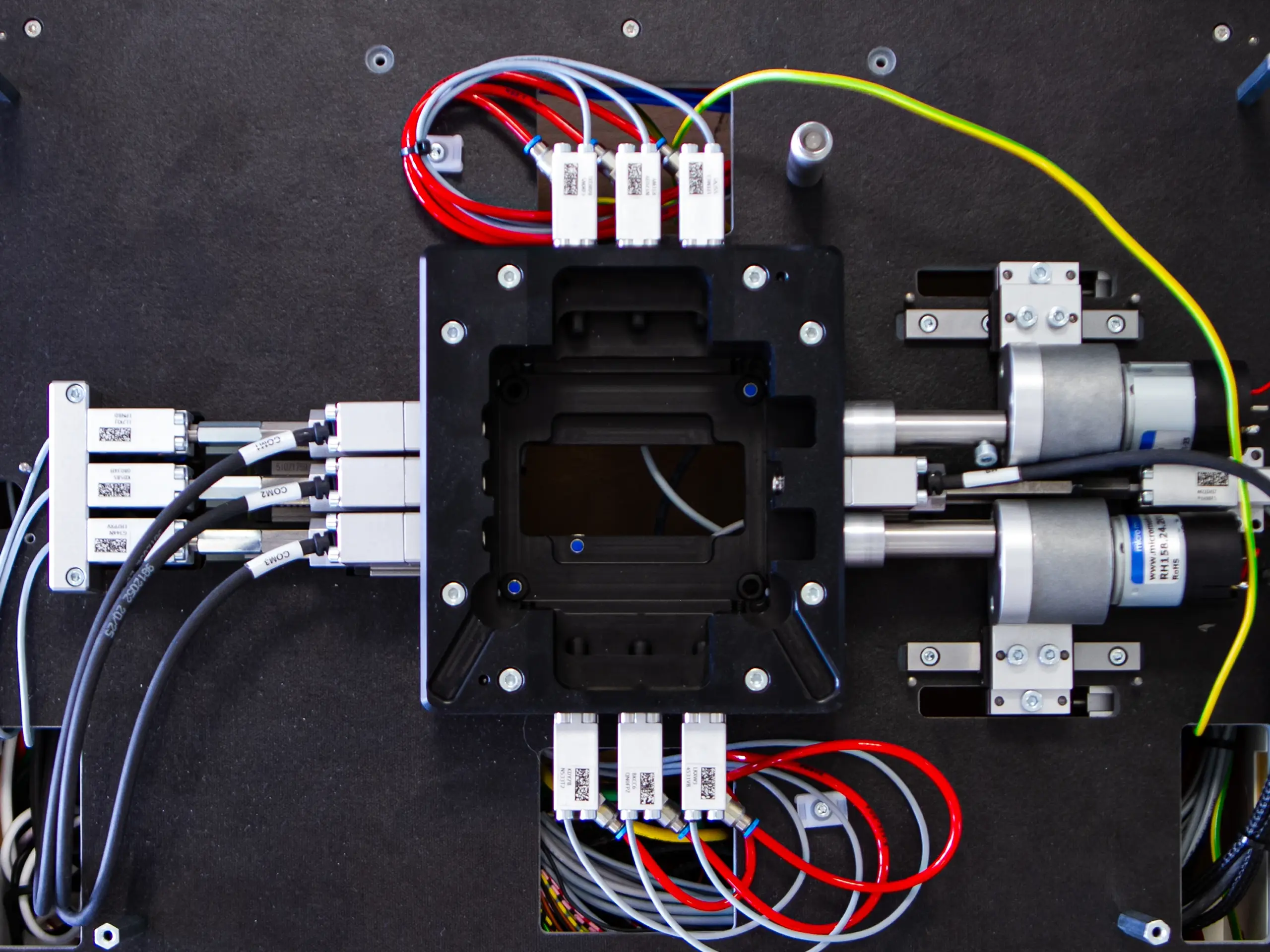
EOL test stand for headset control units
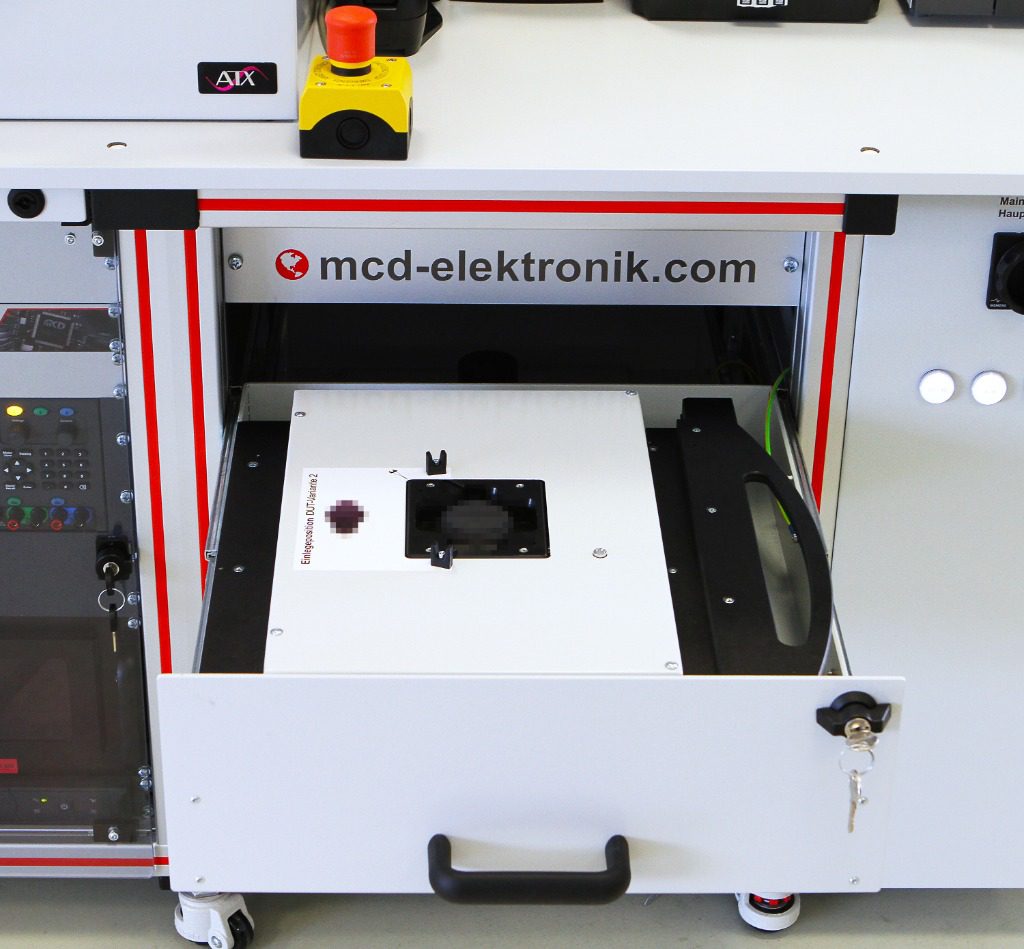
Front view of the test stand
Test fixture in the EOL system
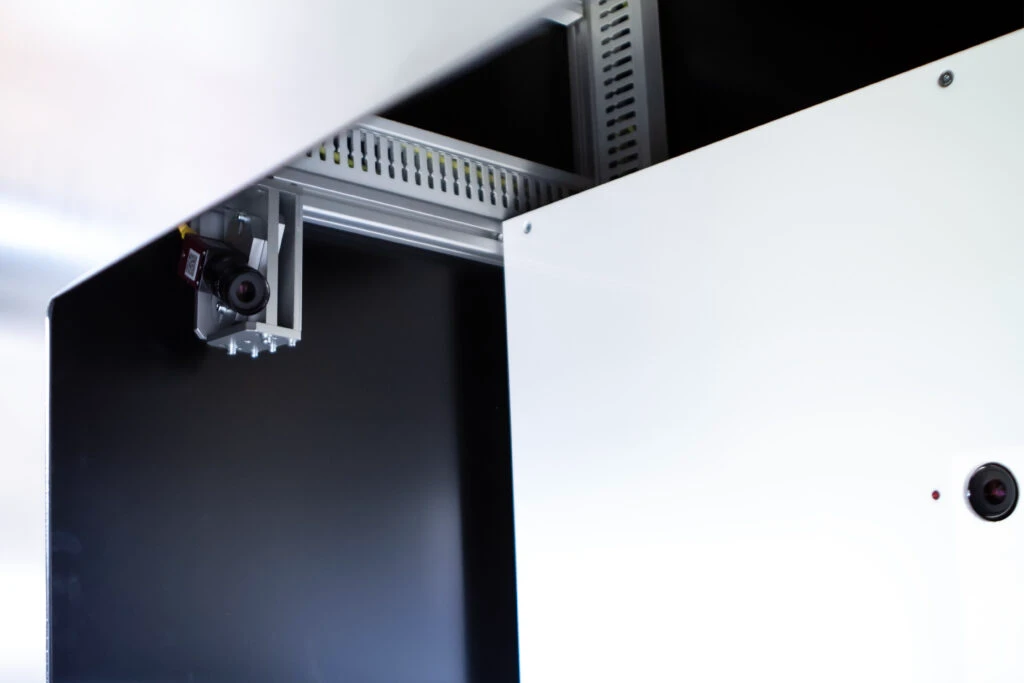
Camera system in the EOL test stand, exterior mirror
Detailed view of the camera system
Optical test technology
Test fixture for headset control units
Detailed view of the test fixture
Current and voltage measurements

Electronic assemblies are functionally tested and relevant electrical parameters are recorded automatically.

  • Functional tests of electronic assemblies
  • Current measurements
  • Voltage measurements
  • Load and safety tests

Interfaces, signals and communication functions can be tested and evaluated in a targeted way.

  • Signal tests
  • Communication tests
  • Testing of relevant interfaces
  • Documentation of measurement results

Depending on the product, additional test methods for radio modules as well as mechanical, haptic and optical properties can be integrated.

  • RF tests for antenna modules
  • RF tests for transmitter and receiver modules
  • Mechanical tests
  • Haptic tests
  • Optical tests

In addition to the actual quality test, control units can be programmed and parameterized within the EOL process.

  • Programming of control units
  • Parameterization of control units
  • Series release based on test results
  • Connection to databases or higher-level systems
mcd_plus_white
Complete quality assurance and traceability

For complete quality assurance and traceability, measurement results are documented and analyzed. If required, the EOL test system can be connected to databases or higher-level systems.

Test methods and concepts used

EOL tests are designed to match the product, cycle time, test requirements and level of automation. Different test methods and system concepts can be combined into a continuous end-of-line solution.

Electrical and functional tests
Functional tests of electronic assemblies
Current and voltage measurements
Signal and communication tests
Load and safety tests
RF, mechanical and optical tests
RF tests for antenna, transmitter and receiver modules
Mechanical tests
Haptic tests
Optical tests
Programming and process integration
Programming and parameterization of control units
Leak tests
Documentation and analysis of measurement results
Connection to databases and higher-level systems
Flexible EOL concepts
Manual test stations
Semi-automatic stations
Rotary indexing tables
Robot-assisted test cells
Fully integrated line solutions

FREQUENTLY ASKED QUESTIONS

FAQS

An end-of-line test, or EOL test for short, is the final inspection of a product at the end of the manufacturing process. It verifies whether all relevant functions, electrical properties, interfaces, and quality characteristics meet the defined requirements. The goal is to identify defective products before shipment and to reliably ensure quality in mass production.
EOL test systems are suitable for electronic, electromechanical, and mechatronic products. These include, for example, control units, sensors, antenna and radio modules, automotive components, control elements, switches, communication modules, and industrial electronics assemblies. Depending on the device under test, functional tests, current and voltage measurements, signal tests, RF tests, and mechanical, haptic, or optical tests can be integrated.
An end-of-line test, or EOL test for short, is the final inspection of a product at the end of the manufacturing process. It verifies whether all relevant functions, electrical properties, interfaces, and quality characteristics meet the defined requirements. The goal is to identify defective products before shipment and to reliably ensure quality in mass production.
Yes. EOL test systems can be flexibly adapted to existing manufacturing processes. Depending on the product, cycle time, and degree of automation, options include manual test stations, semi-automatic stations, rotary indexing tables, mobile single-station units, robot-assisted test cells, or fully integrated line solutions. It is important that the adaptation, test sequence, data integration, and handling are precisely tailored to the existing production environment.
Robotics supports modern EOL test systems primarily by automating the loading, unloading, positioning, and handling of test items. This helps optimize cycle times, reduce operator influence, and stabilize test processes. AI can also assist with the analysis of measurement data, pattern recognition, fault classification, and the optimization of test sequences. As a result, EOL testing becomes more efficient, transparent, and scalable.

Downloads

Detailed Information

Technical Report

REFERENCE PROJECTS

Reliable testing technology for Battery Management Systems

Multifunction Antennas

Headset Control Units

Multiple Haptic Component Testing